

Vinyl vs Laminate Flooring: Which Is Better for Calgary Weather?
Homeowners in Calgary constantly have to choose between laminate and vinyl flooring. Both choices are fashionable, nicely priced, and useful, but which one really adapts to Calgary's particular climate? Let us anatomize it in a conversational manner.
Vinyl flooring is better than laminate for Calgary homes because it is 100% waterproof, handles temperature changes, and resists damage from snow and dry winters. Laminate works in dry areas but struggles with moisture and extreme cold.
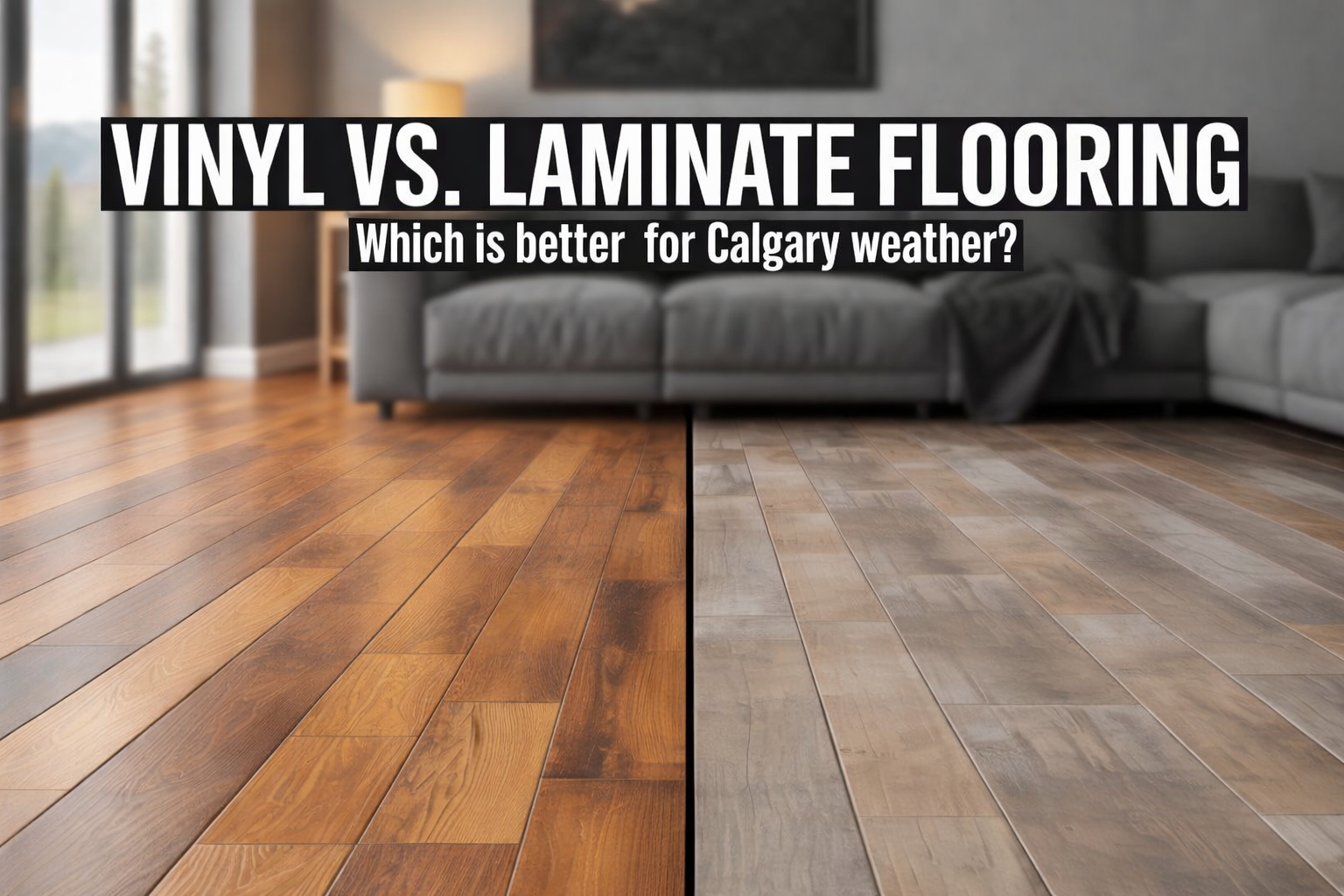
When deciding between vinyl and laminate flooring in Calgary, leakproof flooring is pivotal due to the megacity's severe winters, snowmelt, and dry inner air. Both vinyl and laminate flooring give nicely priced, fashionable options for Calgary homes. Because vinyl is more stable and resistant to humidity, it generally outperforms laminate in this climate. To help you in making a decision, let us bandy it.
Read: Best Flooring Options for Calgary Homes (Cold Climate Guide)
Calgary Weather & Flooring Challenges
Calgary’s weather is famously unpredictable: freezing winters, dry air, and occasional summer humidity. This means flooring needs to handle:
Temperature fluctuations
Moisture from snow and slush
Dryness that can cause warping
Vinyl flooring, made from PVC layers, excels in wet-prone areas like entryways where Calgary's slushy boots track in moisture—it's often 100% waterproof, preventing swelling or warping.
Laminate, with its wood-fiber core topped by a photo layer, mimics wood beautifully but only handles spills if you act fast; it's water-resistant at best, not ideal for basements or kitchens in our snowy weather. Vinyl feels softer underfoot and pairs well with radiant heating, common in Calgary homes, while laminate's harder surface suits dry living rooms but can gap in low winter humidity.
Laminate Flooring Pros and Cons
Pros:
Affordable and stylish with realistic wood looks.
Easy to install with click-lock systems.
Resistant to scratches and wear.
Cons:
Not waterproof—spills and moisture can cause swelling.
Can feel harder underfoot compared to vinyl.
Less forgiving in Calgary’s dry winters (may warp or gap).
Vinyl Flooring: Pros and Cons
Pros:
Completely waterproof flooring. Homeowners in Calgary adore their basements, baths, and kitchens.
warmer and softer underfoot.
resilient to muck, snow, and dampness.
available in luxury vinyl planks (LVP), which exquisitely resemble hardwood.
Cons:
a little more costly than laminate.
If not shielded, it may dent beneath large furniture.
Myths vs Reality About Vinyl and Laminate Flooring
Myth 1: Laminate is impervious to water.
Reality: Laminate is only marginally resistant to water. It can be harmed by standing water.
Myth 2: Vinyl appears inexpensive.
Reality: Hardwood and contemporary luxury vinyl boards are almost identical.
Myth 3: The lifespan of laminate and vinyl is equal.
Reality: Because vinyl is more resilient to moisture and temperature fluctuations, it often lasts longer in Calgary's climate.
Myth: Vinyl and laminate are equally watertight.
Reality: The HDF core of laminate collects moisture over time, necessitating expensive replacements during Calgary's rainy winters; "waterproof laminate" typically only has sealed edges rather than completely submersible like vinyl.
Myth: Vinyl appears phony and inexpensive.
Reality: Realistic wood/stone textures with embossed grains are achieved by modern luxury vinyl, which frequently outperforms laminate's printed layer in high-resolution detail.
Myth: Both last forever.
Reality: Vinyl outlasts laminate 15–25 years vs 10–15 in tough climates, thanks to thicker wear layers resisting Calgary's grit and traffic.
Myth: Installation is a hassle for vinyl.
Reality: Both click-lock easily over concrete slabs common in Calgary basements—no glue needed for floating installs.
FAQs for Vinyl vs Laminate Flooring
-
A: Vinyl tends to feel softer and warmer, especially with underlayment.
-
A: Not ideal—basements are prone to moisture, making vinyl the safer choice.
-
A: Laminate often uses recycled wood materials, while vinyl is synthetic. However, durability means vinyl may need fewer replacements.
-
A: Vinyl, hands down—it's fully waterproof for kitchens, baths, and entryways where snowmelt hits hard.
-
A: Only high-moisture-rated versions, and even then, pair with a good vapour barrier; vinyl's safer long-term.
-
A: Vinyl's softer and gouge-resistant; laminate scratches easier but hides dirt better in low light.
-
A: Both boost value, but vinyl's durability appeals to buyers in our climate, especially with underlayment for sound/noise bylaws.
-
A: Laminate starts cheaper, but vinyl saves on repairs from water damage over time.
How YYC Flooring Experts Can Help
Choosing between vinyl and laminate flooring in Calgary homes is about more than simply appearance; it is also about performance in our climate. YYC flooring consultants can assess your home's moisture and temperature needs.
They provide the best waterproof flooring options in Calgary.
To ensure maximum longevity, expert installation is recommended.
Final Thoughts
If you want flooring that can handle Calgary’s snow, slush, and dry winters, vinyl flooring is usually the winner. Laminate is great for budget-friendly style in dry areas, but vinyl’s waterproof resilience makes it a smarter long-term investment.
Ready to upgrade your floors? YYC Floorings is here to help you choose the perfect option for your Calgary home.
