

Terrazzo Tile Revival: Why Calgary Homeowners Are Choosing This Floor in 2026
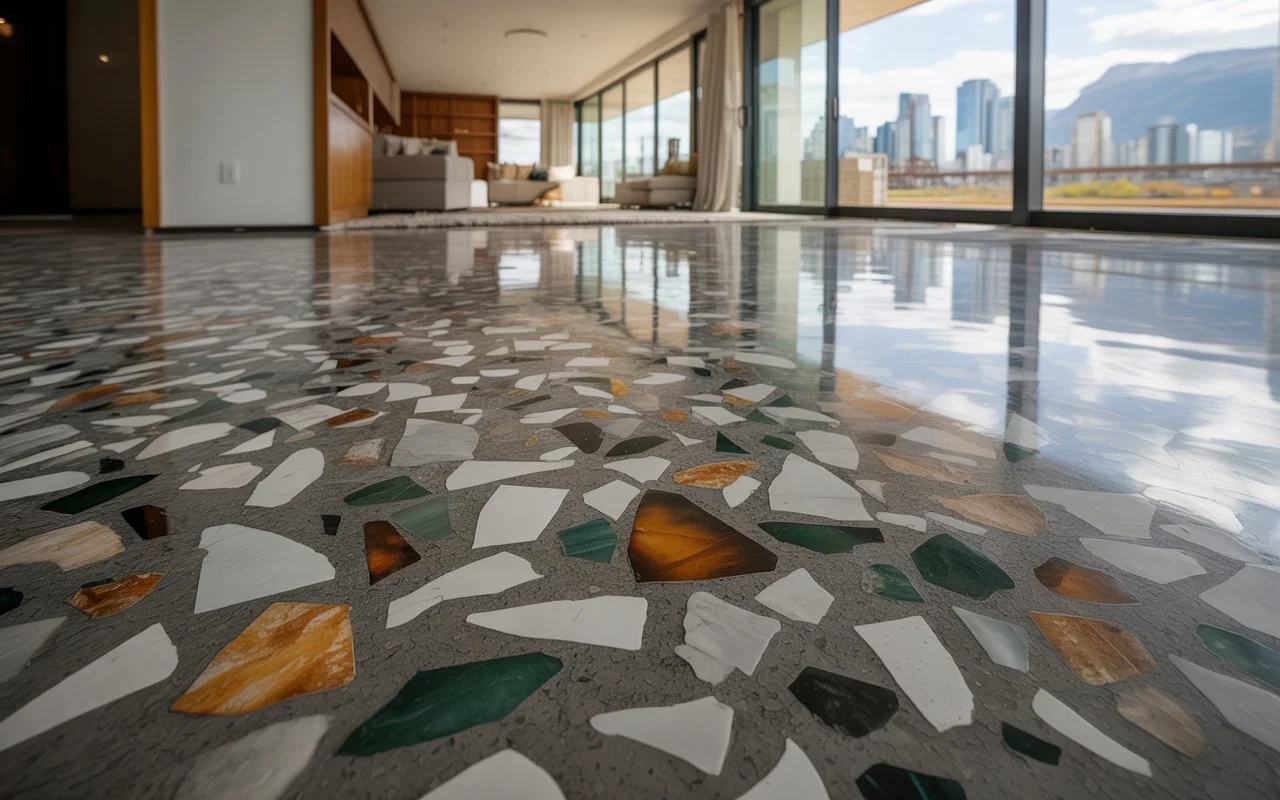
Why Terrazzo Is Making a Comeback in Calgary
Terrazzo was the go-to flooring in mid-century commercial and institutional buildings across Alberta. By the 1990s it fell out of favour as laminate and ceramic tile became cheaper and faster to install. What has changed since then is two-fold: manufacturing technology has dramatically expanded the colour and aggregate options available, and homeowners have started to care more about lifecycle cost than upfront price.
Calgary's design scene has also matured. Neighbourhoods like Inglewood and the East Village now feature a mix of heritage bones and contemporary interiors, and terrazzo bridges that gap effortlessly. The material is one of the few flooring options that looks equally at home in a restored 1940s bungalow in Ramsay and a new infill in Currie Barracks.
Sustainability is a real driver too. Most of the tiles we source contain recycled glass and stone chips — material that would otherwise go to landfill. Because the floor lasts for generations, the lifetime environmental footprint is far lower than replacing ceramic every 10–15 years. The National Terrazzo & Mosaic Association provides in-depth guidance on terrazzo's environmental credentials and recycled-content standards.
Calgary-Proof Durability: What the Material Actually Does
Calgary floors face a specific set of challenges that milder climates do not: gravel tracked in from back alleys in summer, chloride road salt from October through April, dramatic humidity swings between seasons, and the relentless freeze-thaw cycles that crack lesser materials. Terrazzo handles all of these well, provided the installation is done correctly.
The floor is made by embedding stone, glass, or quartz chips into a cement or epoxy binder, which is then ground and polished to a smooth surface. That dense composite is nearly impossible to scratch under normal household use, and when properly sealed it becomes non-porous — meaning the salt and moisture from wet boots sit on the surface rather than soaking in and degrading the material.
Bathrooms and mudrooms: With a textured or honed finish (R10 or R11 slip rating), terrazzo is an excellent choice for wet areas. We always recommend honed over high-gloss for any room that sees water and foot traffic together.
The Economics: Why the Upfront Cost Makes Sense
We get asked "is terrazzo expensive?" on almost every consultation. The honest answer is that the installed cost is higher than basic ceramic or laminate — typically in the range of $18–$30 per square foot installed in Calgary, depending on material type and subfloor preparation. But that figure only makes sense in context.
Ceramic tile in a mudroom needs new grout within three to five years, and full replacement is common at the ten-year mark. Terrazzo floors we installed in the 1990s are still in daily use, looking excellent. The table below compares total ownership cost over a realistic period:
| Feature | Terrazzo Tile | Standard Ceramic |
|---|---|---|
| Lifespan | 75–100+ years | 10–15 years |
| Resale Value | High — premium buyers recognise the material | Moderate |
| Maintenance | Low — pH-neutral mop, reseal every 2–3 years | Medium — grout scrubbing required |
| Winter Salt Resistance | Excellent when sealed | Moderate |
| Repair | Single tile swap if damaged | Grout recolour or full section relay |
Note on lifespan: The 75–100+ year estimate comes from our direct experience servicing installations across Calgary, including floors laid in the 1970s that are still structurally sound. Proper sealing and maintenance are required to achieve this.
For a property you plan to hold long-term — or to sell at a premium — that lifecycle picture is compelling. Calgary real estate agents we have spoken with consistently report that natural stone floors, including terrazzo, are mentioned positively by buyers in the $700K-and-up segment.
Which Terrazzo Material Is Right for Your Calgary Home?
Not all terrazzo is the same. The binder and aggregate combination affects appearance, weight, heat retention, and cost. Here is how we guide clients through the decision. For a full overview of our available tile options, visit our Calgary Tile Flooring page.
| Material Type | Best For | Our Calgary Insight |
|---|---|---|
| Marble Chip | Luxury finishes, feature floors | Favourite in Mount Royal and Elbow Park — the timeless choice |
| Quartz | High-traffic kitchens, mudrooms | Handles Calgary road salt and grit better than most |
| Glass Chip | Bold, modern lofts | Popular in Beltline and East Village — reflects light beautifully |
| Epoxy Base | Upper floors, basement suites | Lightweight; avoids load concerns on older Calgary infills |
| Cement-Based | Rustic, warm aesthetics | Fully customisable — we often blend in local granite flecks |
Epoxy-based terrazzo is the choice for upper-floor installations in older Calgary homes where the structural load of cement is a concern. Cement-based terrazzo is heavier but provides a warmer, more rustic finish that suits basement suites and character homes well.
Expert Installation Tips From Our Calgary Team
Pair It With In-Floor Heating
Terrazzo has excellent thermal mass: it heats efficiently and holds warmth long after the system cycles off. We regularly pair it with systems like Nuheat, particularly in entry halls and bathrooms. On a -25°C January morning, a pre-warmed terrazzo entry floor makes a real difference to daily life.
Choose the Right Finish for the Room
Polished terrazzo is stunning but reflects light in ways that show footprints and water marks more readily. For mudrooms and bathrooms, we recommend a honed or matte finish with a minimum R10 slip rating. For formal living areas and feature floors, a high-polish finish is hard to beat.
Let the Floor Be the Feature
Slim, modern baseboards (under 3 inches) allow the terrazzo pattern to read fully from the doorway. Wide heritage-style baseboards are the single most common thing we see that undersells a beautiful floor.
Practical Maintenance for Calgary Conditions
- Seal on installation and re-seal every 2–3 years to maintain the moisture barrier against winter salt.
- Daily cleaning: microfibre dust mop to remove grit, which acts as sandpaper on the polish over time.
- Mopping: always use a pH-neutral cleaner. Avoid vinegar, bleach, or citrus-based products — acids etch the stone chips and dull the finish permanently.
- For deep scratches or dulling: a professional re-grind and re-polish restores the surface to original condition. This is rarely needed but available.
- Choose a Calgary-based installer familiar with local climate conditions — proper subfloor preparation and curing matter more here than in milder regions.
- Consider starting with a high-impact area like an entryway or powder room before committing to larger spaces, especially if you are new to the material.
Frequently Asked Questions
Is terrazzo tile slippery in bathrooms and mudrooms?
It depends on the finish. High-gloss polished terrazzo is slippery when wet, and we do not recommend it for bathrooms or mudrooms. A honed (matte) finish with a minimum R10 or R11 slip rating provides solid traction for wet feet and snow-covered boots. High-quality anti-slip sealers can also be applied without visibly dulling the surface.
Can I use terrazzo with in-floor heating?
Yes — and we actively recommend the combination. Because terrazzo is a dense stone composite, it conducts heat efficiently and retains warmth after the system turns off. It is one of the best materials for hydronic or electric underfloor heating. We have installed this combination in over forty Calgary homes in the last three years with no issues.
What is the difference between terrazzo tiles and poured-in-place terrazzo?
Poured terrazzo is created on-site, producing a completely seamless surface. It is beautiful and long-lasting but significantly more expensive and requires specialist labour. Most residential projects in Calgary use terrazzo tiles instead — pre-manufactured in standard sizes (typically 12"×12" up to 24"×24"), faster to install, and easier to repair if a single tile is ever damaged. The visual result is essentially identical for most interior applications.
How do I clean and maintain my terrazzo floor?
Maintenance is simpler than most people expect. Use a microfibre mop daily to remove grit (grit acts like sandpaper on the polish). For mopping, always use a pH-neutral floor cleaner — never vinegar, bleach, or citrus products. Re-seal every 2–3 years with a penetrating stone sealer. In Calgary specifically, a post-winter clean in April or May is a good habit to remove any residual road salt before it has time to work into the surface.
Will terrazzo look dated in five or ten years?
Terrazzo has been in continuous use for over 500 years — it is one of the few flooring materials that genuinely transcends trend cycles. Its current popularity reflects an appreciation for durability and natural materials that has been building for a decade, not a sudden fashion spike. The customisability of chip size, colour, and aggregate means the pattern you choose today can be as understated or as bold as you want — and either will look intentional in ten years.
How do I start — what is the first step?
The most useful first step is seeing samples in your actual space, under your actual lighting conditions. Showroom lighting is different from a Calgary winter afternoon coming through a north-facing window. We bring samples to your home at no charge so you can compare options before committing.
Ready to See Terrazzo in Your Home?
Our team has been installing natural stone floors in Calgary since 2009. If you are considering terrazzo for a renovation or new build, we are happy to walk you through the options, bring samples to your space, and give you a clear, itemised quote with no pressure.
Explore Our Calgary Tile ServicesContent based on direct installation experience across Calgary. All lifespan and performance observations reflect YYC Floorings projects completed since 2009. Pricing ranges are estimates for the Calgary market as of early 2026 and may vary by project scope and subfloor conditions.
