

Stair Carpet Installation in Calgary: A Real Homeowner's Guide to Getting It Right
Calgary stairs take a beating — cold boots, slippery mornings, and homes that have been settling for decades. This guide breaks down everything a local homeowner needs to know about stair carpet installation, from choosing between the waterfall and cap-and-band methods to picking the right fiber for Alberta winters. No fluff, just practical answers.
Last winter, a Calgary family reached out to us two weeks before the holidays. They had two young kids, a dog, and a set of hardwood stairs that had become genuinely dangerous — scuffed, slippery, and impossible to grip in wool socks. They'd put off dealing with it for years because they assumed it would be complicated and expensive.
It wasn't. Within a single afternoon, those stairs were transformed. Safer, quieter, and — honestly — a lot more welcoming.
That's the kind of difference stair carpeting makes. And if you're a Calgary homeowner thinking about making the same upgrade, this guide is written for you — not as a sales pitch, but as a practical walkthrough of what to expect, what decisions you'll face, and how to make sure the result lasts.
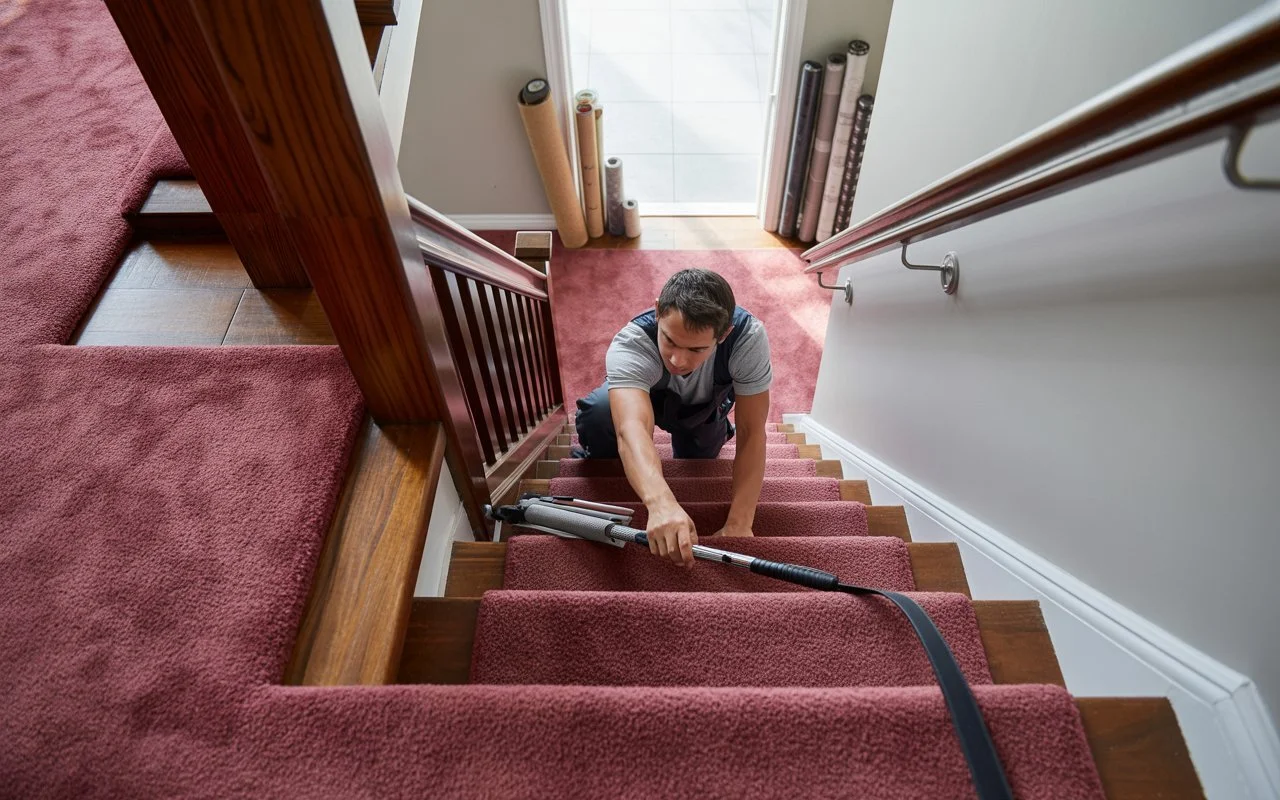
Why Calgary Stairs Are a Unique Challenge
Most flooring guides are written for generic houses in generic climates. Calgary isn't that.
Our winters swing from -30°C cold snaps to unexpected Chinook thaws within the same week. That kind of temperature variation causes wood to expand and contract — which means older Calgary homes often have stairs that have shifted, settled, or slightly warped over time. Treads that aren't perfectly level. Risers with small gaps. Nosing edges that have worn unevenly.
Layer on top of that the daily reality of Alberta winters: snow boots tracking in slush, kids racing up and down in socks, pets skidding on bare wood. Hard flooring surfaces on stairs stop being a style choice and start being a safety concern pretty quickly.
Carpet solves a lot of these problems at once. It grips. It cushions. It insulates against cold drafts that rise through uncarpeted stairwells. And done right, it holds up for 10 to 15 years even in high-traffic Calgary homes.
The Two Main Installation Methods (And Which One Is Right for Your Home)
When you start researching stair carpet installation, you'll quickly run into two terms: the waterfall method and the cap-and-band method. Here's what they actually mean — and why it matters for you.
The Waterfall Method
This is the more common approach. The carpet runs in one continuous piece, flowing over the nose of each stair tread and straight down the riser — like a waterfall of fabric. It's a clean, modern look that works especially well on straight staircases.
The main advantage is that it's slightly faster to install and creates a seamless visual flow. The trade-off is that the carpet bunches slightly at the nose of each stair, which can show more wear over time in very high-traffic homes.
The Cap-and-Band Method
This approach cuts and fits the carpet precisely around each individual tread and riser. The wood nosing — the front edge of each step — remains visible, creating a more tailored, crafted look.
It takes more time and skill to install correctly, but the result is more durable. The carpet sits flatter on each surface, there's less bunching, and the exposed wood edges add a touch of visual detail that works well in traditional or transitional Calgary homes.
For most Calgary properties — particularly older homes with some settling in the foundation — we recommend cap-and-band. It accommodates slight unevenness better, and it holds up longer under heavy use.
What Actually Happens on Installation Day
A lot of homeowners are surprised by how straightforward the process is when done by professionals. Here's a realistic picture of what to expect.
Step 1: Measuring and Assessment
Every tread, riser, and landing gets measured individually — not assumed. Calgary stairs, especially in homes more than 20 years old, often have subtle variations from top to bottom. A professional catches these before cutting, not after.
Step 2: Prep Work
Old carpet comes out, along with any staples, tack strips, or debris. If there are loose treads or damaged risers, those get addressed before anything goes in. Skipping this step is why DIY stair carpeting often looks great for six months and then starts to buckle.
New tack strips go in approximately 1/4 inch from the edges, with tacks facing inward. High-density padding is cut precisely — no overlaps, no gaps — and the materials are acclimated to your home's indoor humidity for 24 to 48 hours before installation begins. That last detail matters more than most people realize in Calgary's dry winters.
Step 3: Installation
This is where the skill shows. Using a knee kicker and stretcher, the carpet is pulled taut and locked in place. Wrinkles and loose edges — the hallmarks of a rushed DIY job — come from skipping the tension step. A standard 13 to 15 step staircase typically takes 4 to 6 hours from start to finish. Add a landing or an L-shape turn and you're looking at 2 to 4 extra hours.
Choosing the Right Carpet for Calgary Stairs
Not all carpet is made for stairs, and not all stair carpet is made for Alberta.
The key specs to look for are pile height, fiber type, and stain resistance. Low-pile and looped Berber styles hold up significantly better on stairs than plush or high-pile options. They resist compression, show less wear on the nose of each tread, and are easier to vacuum thoroughly.
For fiber type, nylon is the workhorse — durable, resilient, and available at a range of price points. Wool blends are beautiful and naturally insulating, but they come at a higher cost and need more careful maintenance. For homes with pets, kids, or both, a stain-treated nylon is usually the practical sweet spot.
The padding underneath matters just as much. Stair padding is intentionally thinner than room padding — thicker isn't better here. Too-thick padding creates a soft, unstable surface that shifts under foot traffic and causes the carpet above to loosen faster.
The Real Benefits (Beyond Just Looks)
People often start this conversation focused on aesthetics — which color, which pattern, how it ties into the rest of the floors. That's valid. But the benefits that keep homeowners satisfied five years later are usually more practical.
Safety: Carpeted stairs dramatically reduce slip risk — critical for young children, older adults, and anyone tracking in wet boots during an Alberta winter. A fall on carpeted stairs is also significantly less severe than one on bare wood or tile.
Noise: If you live in a multi-story home, you know the sound of someone coming down the stairs at midnight. Carpet absorbs that impact noise in a way that no hard surface can match.
Warmth: Cold air settles at floor level and rises through stairwells. Carpeted stairs and padding create a thermal barrier that makes a noticeable difference in homes with basements or attached garages.
Longevity: A professionally installed carpet on well-prepped stairs, properly maintained, routinely lasts 10 to 15 years. Compare that to paint touch-ups, wood refinishing, or tile regrouting that high-traffic stairs often need.
Should You DIY It or Hire a Professional?
Honest answer: it depends on your stairs and your skill level.
A short, straight staircase in a newer home with level, consistent treads is a manageable DIY project if you're comfortable with tools and willing to take the time to do the prep correctly. The key tools you'll need — a knee kicker, carpet stretcher, and stair tool — can usually be rented.
But if your stairs have any turns, landings, or irregularities — and many Calgary homes do — DIY becomes significantly harder. The most common DIY failures we see are wrinkled carpet (from insufficient stretching), edges pulling away from the tack strips (from incorrect installation), and uneven fits around turns (from poor measuring). These don't just look bad — they create trip hazards.
Professional installation includes a warranty on the workmanship itself. At YYC Floorings, that's a 1 to 2 year workmanship guarantee plus whatever manufacturer warranty comes with the carpet — which can extend up to 20 years on some products.
How to Keep Your Stair Carpet Looking Good for Years
Stair carpet doesn't require a complicated maintenance routine, but it does require a consistent one.
Vacuum weekly using a crevice tool along the edges where dust and debris accumulate most. A handheld attachment works better on stairs than dragging a full vacuum up and down.
Spot-clean spills immediately — blot, don't rub, using a mild detergent solution. The faster you act, the less likely a stain sets.
Steam clean annually. This removes embedded dirt that vacuuming leaves behind and helps the fibers bounce back from compression.
Avoid dragging heavy furniture or sharp objects across the surface. One deep snag on a stair edge is much harder to fix than one on a flat floor.
Frequently Asked Questions
-
Costs vary based on the number of stairs, carpet material, and installation method. Basic nylon on a straight staircase is on the more affordable end; premium wool blends, complex layouts, or difficult access add to the price. YYC Floorings provides transparent quotes with no hidden fees — the best approach is always a free in-home consultation where the actual stairs can be assessed.
-
Sometimes, but it depends on the condition of the existing surface. If it's firmly attached with no loose edges or hollow spots, it can work as a base. But if there's any instability, the carpet will move and loosen too — so it's usually better to start clean.
-
Low-pile, stain-treated nylon is the most practical choice for pet-friendly homes. Avoid loops styles like standard Berber if you have cats — claws can snag and pull loops, which unravels quickly. A tighter loop or cut pile holds up much better.
-
Yes. L-shapes, U-turns, and multi-level landings are all manageable — they just require more precise cutting and fitting. This is exactly where professional installation earns its value over DIY.
The Bottom Line
Stair carpet installation isn't glamorous the way a kitchen renovation is. Nobody's posting before-and-after photos of their stairs on social media. But it's one of the few home improvements where the daily impact — safer footing, less noise, warmer mornings — is felt every single day.
For Calgary homeowners specifically, it's also one of the most practical decisions you can make given our climate. The winters are long. The boots are muddy. The stairs are busy.
If you're ready to have a conversation about what your stairs actually need — not a generic quote, but a real assessment — reach out to YYC Floorings for a free in-home consultation. We'll look at your stairs, talk through the options that make sense for your home and budget, and give you a clear picture of what the project involves.
No pressure. Just useful information from people who've done this for a lot of Calgary homes.
